
What’s Really in Your Skincare?
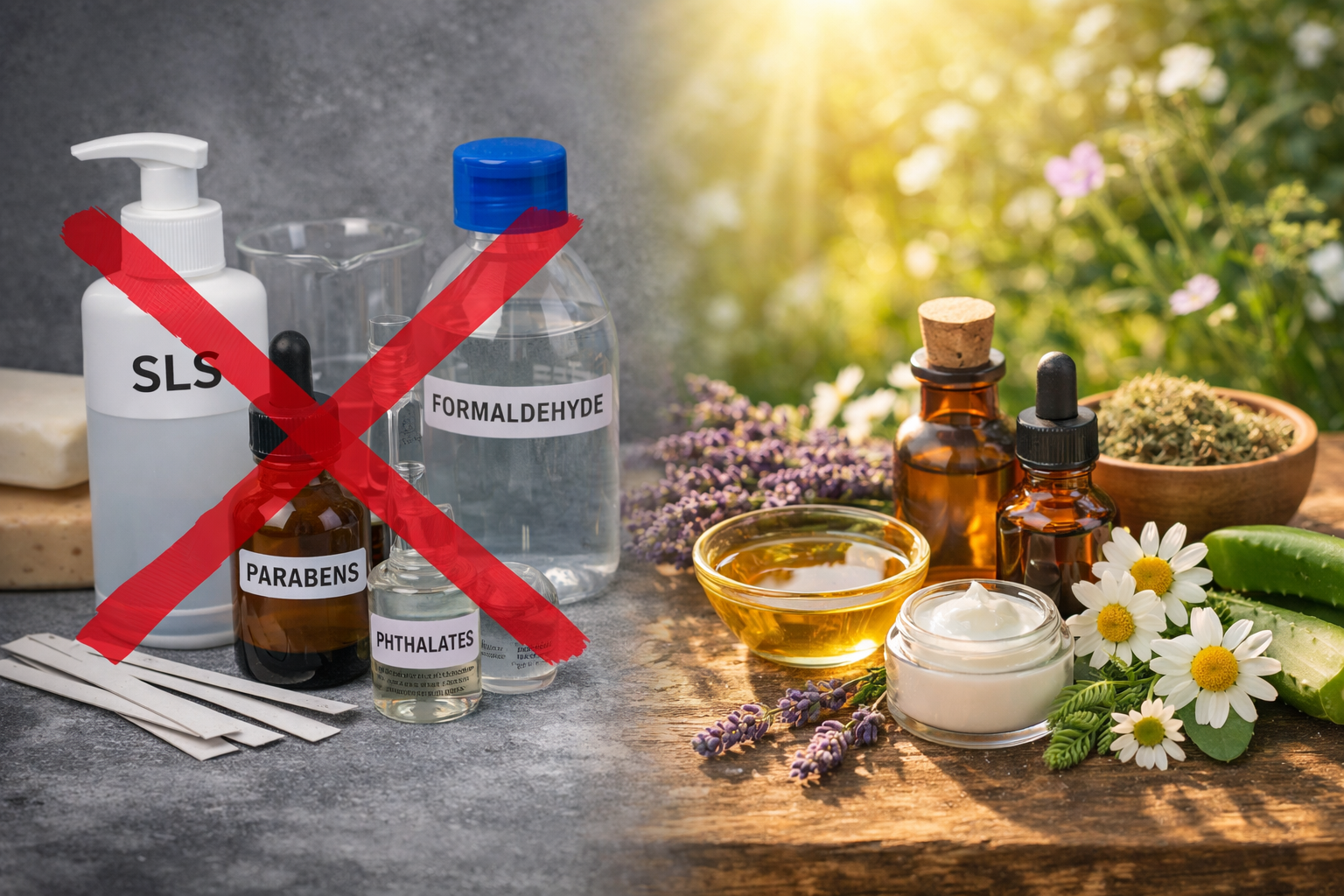
Not all skincare ingredients are created equal. Understanding what’s inside your products helps you choose formulations that support healthy skin and avoid ingredients that may cause irritation or raise concerns.
How Common Ingredients Affect Your Skin and Body
Most of us think carefully about what we eat, but we rarely stop to consider what we put on our skin.
Your skin is your body’s largest organ. Its primary role is protection, but it also interacts with many of the substances applied to it. Understanding what goes into your daily skincare routine can help you make more informed choices about the products you use.
Research often cited by consumer safety groups suggests the average woman uses around 12 personal care products each day, exposing herself to well over 150 individual ingredients. With that many ingredients in daily use, it makes sense that more people are becoming curious about what those ingredients actually do.
How Skin Absorption Works
Your skin is designed to protect you, but it isn’t a solid wall.
Some substances applied to the skin can pass through its outer layers and enter the body over time. Modern medicine actually uses this ability intentionally. Products like nicotine patches, hormone patches, and medicated creams are designed to deliver active ingredients through the skin.
Not everything placed on the skin gets absorbed. How much passes through depends on several factors, including:
• the type of ingredient
• how the product is formulated
• how long it remains on the skin
• the condition of the skin barrier
• where it is applied on the body
Areas with thinner skin, such as the face, scalp, and underarms, can absorb substances more easily than thicker areas like the palms or soles of the feet.
Because personal care products are often used daily and across large areas of the body, many people are choosing to become more aware of the ingredients in their skincare routines.
Sodium Lauryl Sulfate (SLS)
What it does in products
Sodium lauryl sulfate is a surfactant, meaning it helps break up oil and dirt while creating the foamy lather many people expect from soaps, shampoos, and body washes.
What it does to skin
Because it removes oils so effectively, it can also strip away some of the skin’s natural protective barrier.
For some people, this may lead to:
• dryness
• irritation
• increased sensitivity
• disruption of the skin’s moisture balance
People with eczema, rosacea, or sensitive skin often find SLS particularly irritating.
Parabens
What they do in products
Parabens are preservatives used to prevent bacteria and mold from growing in cosmetic products. They help extend shelf life and keep products stable.
Why they raise questions
Parabens can mimic certain hormone signals in laboratory studies, which has led researchers to explore their potential influence on the endocrine system.
Regulatory agencies currently allow parabens in cosmetics at specific levels, but many consumers prefer to avoid them when alternatives are available.
How we handle preservation
At Aunt Be Botanicals, we formulate without parabens. However, safe skincare still requires protection against bacteria and mold, especially in water-based products.
When preservation is necessary, we use a paraben-free preservation system chosen to keep products stable while remaining gentle on the skin.
This allows us to maintain both product safety and ingredient transparency.
Synthetic Fragrance and Phthalates
What fragrance does in products
Fragrance blends are added to many personal care products to create a pleasant scent. A single fragrance formula may contain dozens of compounds.
In many conventional formulations, fragrance systems may include phthalates, chemicals used to help scent last longer and disperse more evenly.
Potential effects on skin
Fragrance compounds are one of the most common triggers of skin irritation and sensitivity.
Some people may experience:
• redness
• itching
• headaches or scent sensitivity
• contact dermatitis
Because fragrance formulas are considered proprietary, companies are not required to list each component individually.
A cleaner scent philosophy
Rather than relying on fragrance systems that may contain phthalates, our formulations use essential oils or carefully selected fragrance oils that are specifically phthalate-free.
This approach allows us to create appealing scents while staying aligned with a more ingredient-conscious philosophy.
Formaldehyde-Releasing Preservatives
What they do in products
Ingredients such as DMDM hydantoin are used to prevent microbial contamination in water-based products. They slowly release small amounts of formaldehyde over time to stop bacteria and mold from growing.
Why some consumers avoid them
Formaldehyde itself is a known skin irritant and allergen for some people. Even though the amounts used in cosmetics are small, people with sensitive skin may experience irritation or allergic reactions.
For this reason, many smaller skincare brands choose alternative preservation strategies when formulating products.
Why Skin Barrier Health Matters
Your skin barrier plays an important role in protecting your body.
It helps regulate moisture, shields against environmental stressors, and supports overall skin health. When harsh ingredients repeatedly strip away natural oils or cause irritation, that barrier can become compromised.
Healthy skin barrier function can support:
• better hydration
• reduced irritation
• improved resilience against environmental stressors
Supporting the skin barrier is one of the key goals of thoughtful skincare formulation.
A More Mindful Way to Care for Skin
At Aunt Be Botanicals, every formula begins with a simple goal: support the skin’s natural balance while avoiding ingredients that commonly raise concerns for sensitive skin.
Our products are:
• thoughtfully formulated
• handcrafted in small batches
• made without parabens, sodium lauryl sulfate, or formaldehyde-releasing preservatives
We prioritize botanical oils, plant-based ingredients, and carefully selected functional components that help nurture the skin.
Understanding Your Ingredients
Your skincare routine is something you use every single day. Taking a moment to look at the ingredient list can help you better understand what you're applying to your skin.
You don’t need to be a chemist to make thoughtful choices. Simply becoming familiar with common ingredients and how they function can go a long way toward supporting healthier skin.
Sometimes the most powerful step in skincare is simply reading the label and choosing products you feel confident about. 🌿